


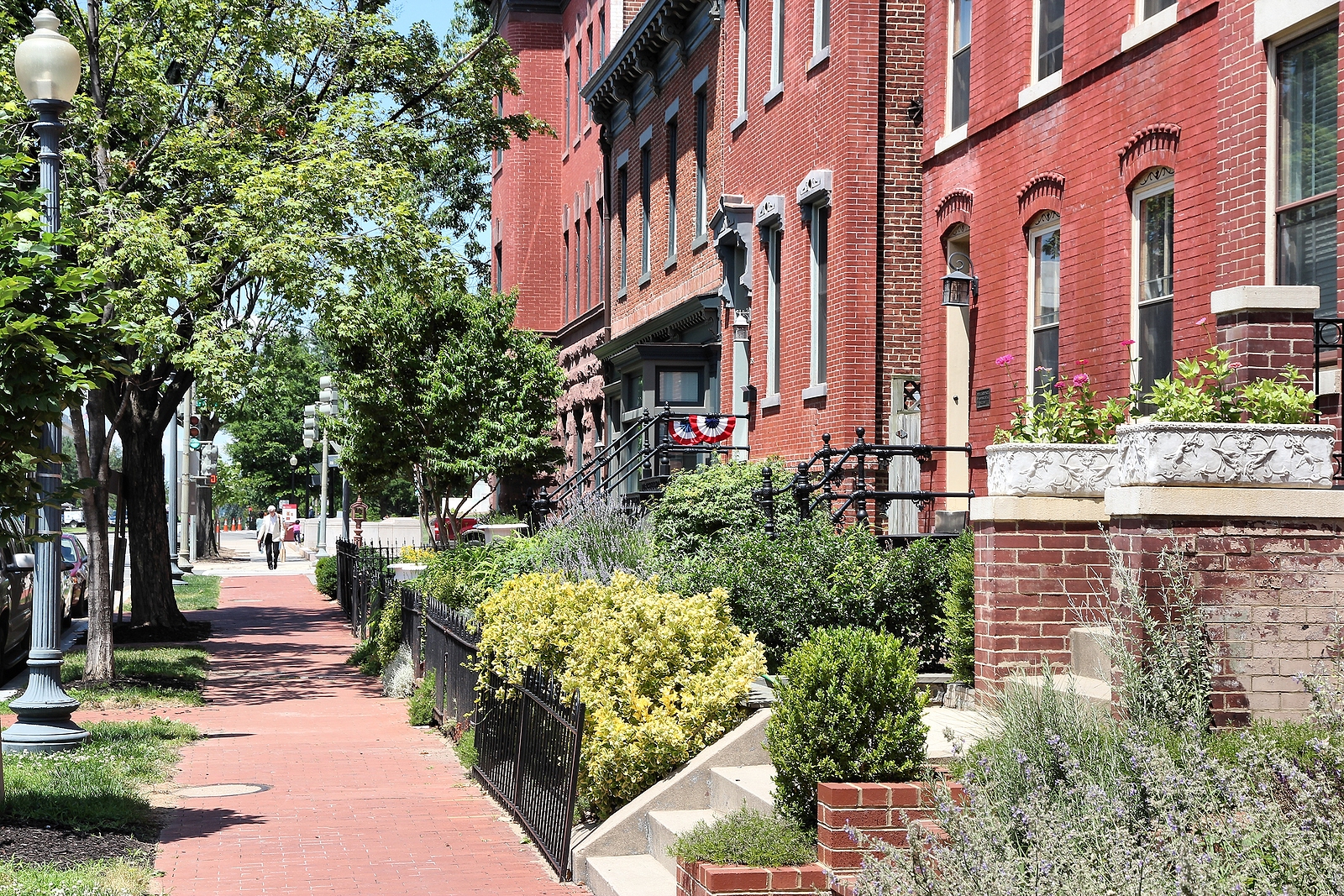
Walk through the streets of Washington, D.C., and you'll find more than beautiful row homes and stately facades. These buildings hold so many stories, not written in ink but in brick, mortar, and craftsmanship. To restore a historic brick home properly, you have to know the story of how and when it was built. That means identifying the original masonry method, the materials the builders used, and the architectural style it reflects. Every era in D.C.'s development left behind clues. From the size of the bricks to the type of mortar between them, tiny details reveal big pieces of information about a building's age and construction.
Federal Period Brickwork (1790–1830)
Brick construction in early Washington reflected the labor and materials of the time. Bricks were made by hand, often on-site, using clay sourced from nearby rivers. These bricks are less uniform, with subtle differences in shape, color, and texture. Colors during this period ranged from salmon to deep red, depending on the clay used and the firing process.
Mortar was typically lime-based, made by mixing lime, sand, and water. This type of mortar is softer than what you'll find in later buildings and should never be replaced with harder cement-based products.
English bond was the most common brick pattern, recognized by alternating courses of headers and stretchers. It provided strength and was used more for structural reasons than for its aesthetic appearance.
Victorian Era Brickwork (1830–1900)
During the Victorian era, decorative brickwork became more common as D.C. grew and prospered. Bricks were still made with local clay, but new pressing methods allowed for greater uniformity and more precise shaping. These changes led to sharper lines and more elaborate detailing.
Flemish bond patterns, which alternate headers and stretchers in a single row, became popular for their decorative appeal. You'll often see these on homes in Capitol Hill and other neighborhoods developed during this period.
Mortar began to shift toward natural cement blends, which offered slightly more strength while remaining breathable. This transitional phase is important when selecting repair materials for homes from this era.
Early 20th Century Masonry (1900–1940)
By the turn of the century, brick production had become industrialized. Bricks were now machine-pressed, leading to consistency in size and a smoother finish. These characteristics make early 20th-century homes easier to date, especially when combined with simpler, more streamlined bond patterns.
Running bond, made up of staggered stretchers, became common in residential construction. It was easier to lay and fit the design trends of the time.
Mortar made with Portland cement began to dominate. It's stronger and more water-resistant but can damage older bricks if used inappropriately during restoration.
How Bond Patterns Can Help Date a Structure
The way bricks are arranged provides insight into both the building's age and its purpose. English bond is associated with early structural use, especially in Federal architecture. Flemish bond, with its visual complexity, became popular as ornamentation gained importance in the 1800s. Running bond signals a move towards efficiency in the 20th century.
Bond patterns may serve a structural role or simply be used for their decorative value. Knowing the difference matters when making repairs or adding new sections to a historic wall.
What Mortar Can Reveal About a Building's Age
Mortar formulas changed with time. Shell-lime mortars point to the late 1700s and early 1800s. As natural cement gained popularity, mortars grew slightly harder and more durable. By the 1910s and 1920s, Portland cement was widely used and remains the most common type today.
Analyzing the mortar between your bricks can help date the structure within a specific timeframe. It also informs what kind of mix should be used during tuckpointing to avoid damaging the original materials.
How Brick Texture and Color Help with Dating
The clay used in early Washington construction gave bricks a distinct reddish hue. Hand-molded bricks tend to have rougher surfaces and slight inconsistencies. As brickmaking evolved, pressed bricks became smoother and more uniform. These visual and tactile differences are among the easiest ways to estimate a building's era at a glance.
Why Expert Analysis Matters
Matching the wrong mortar to historic brick can lead to cracking, moisture damage, and long-term structural problems. Choosing the wrong brick size or bond pattern for repairs can erase original architectural details.
Proper restoration begins with proper identification. That's where the Renaissance Development team brings unique value. Founder Christina Wilson holds a doctorate in architectural history and leads a team deeply familiar with Washington's historic brickwork. Every project is approached with research, experience, and preservation at its core.
Preserve the Past with Precision
If your D.C. home was built before World War II, chances are it contains hidden clues that reveal its history. Renaissance Development can help you uncover those clues and restore your home with traditional methods that honor its origins.
Contact us to schedule a consultation and learn how expert masonry restoration keeps your historic home strong, beautiful, and true to its roots.

